Hedge Fund vs Managed Fund vs DIY: Which Fits You?
Three ways to invest, three very different trade-offs in cost, control and access. Here is how each works and which suits a small investor.
If you have a modest amount to invest and want more than a savings account, you quickly hit a choice: trade it yourself, hand it to a managed fund, or look at a hedge fund. Each has real strengths and real limits, and the best fit depends on your money, your time and your goals.
The three options at a glance
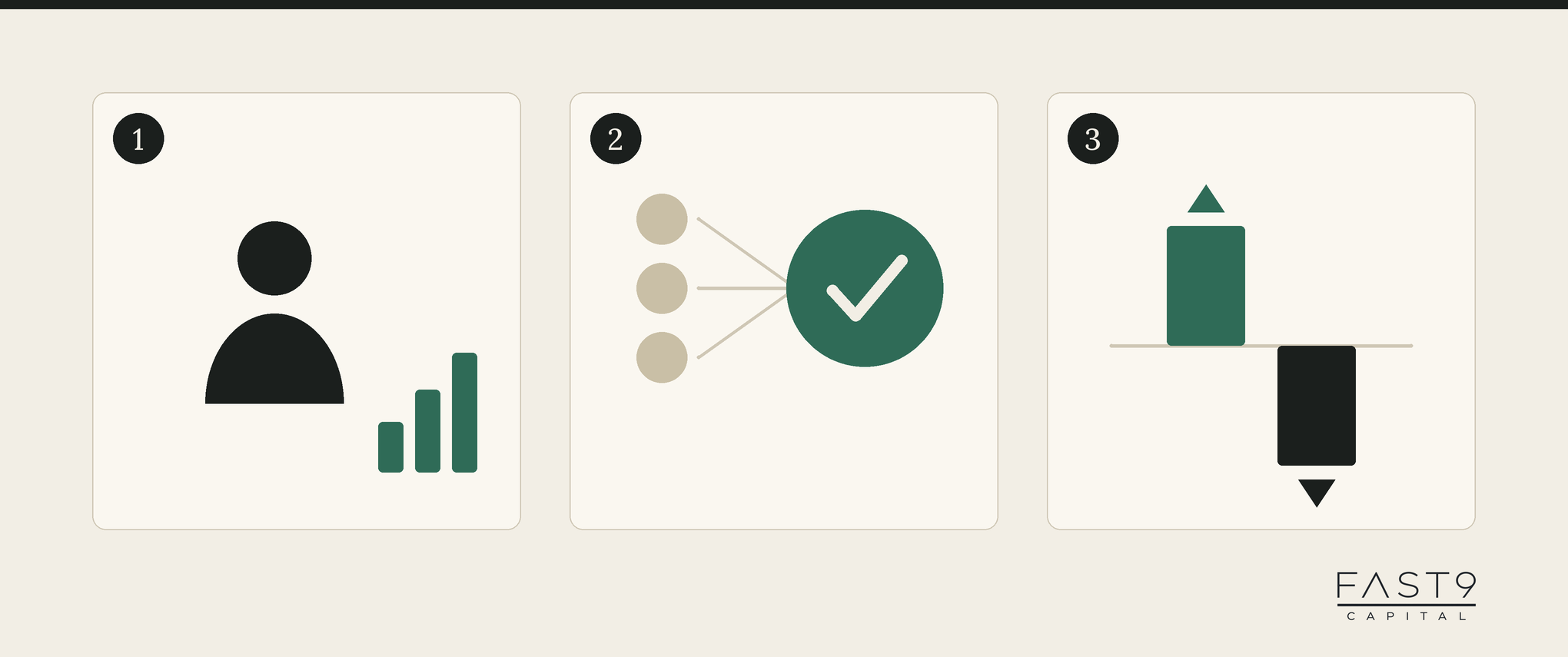
Three investing options: trading yourself, a managed fund and a hedge fund
- Trading it yourself: you make every decision, from what to buy to when to sell.
- A managed fund: your money is pooled with other investors’ and run by a professional manager.
- A hedge fund: a pooled fund that uses more advanced strategies, often including hedging, to aim for returns in different market conditions.
Option 1: Trading it yourself
What it is: you open a brokerage account and make your own trades.
Strengths
- Full control over every decision.
- You can start with almost any amount.
- You can usually withdraw at any time.
Limits
- It takes a lot of time, research and discipline.
- Emotions such as fear and greed often drive poor timing.
- Most individual traders lack the risk controls that professional desks use.
- Losses are entirely your own.
Best for: people who enjoy markets, have time to learn, and can accept losing part of what they put in.
Option 2: A managed fund
What it is: a professionally managed pool, such as a mutual fund or similar product. You buy a share of the fund, and the manager makes the investment decisions.
Strengths
- Professional management with no day-to-day effort from you.
- Usually low minimums.
- Usually easy to buy and sell.
- Spreads your money across many holdings.
Limits
- Annual fees apply, whether the fund makes or loses money.
- Many are built to follow the market, so if the market falls, the fund often falls with it.
- You have little say in how it is run.
Best for: long-term investors who want hands-off exposure to markets and can accept market swings.
Option 3: A hedge fund
What it is: a pooled fund that can use hedging, short positions and other advanced tools. The goal is often to reduce dependence on market direction.
Strengths
- Strategies that don’t rely only on the market going up.
- Professional risk management.
- Can behave differently from a standard stock or bond fund.
Limits
- High minimums. Many hedge funds ask for $100,000 or more.
- Lock-ups. Money may be tied up for one to three years, sometimes with penalties for early exit.
- Heavy fees. The traditional model is around 2% a year plus a share of profits, even in years the fund loses money.
- Limited access. Many are open only to accredited or wealthy investors in certain countries.
Best for: larger investors who meet the requirements and can commit capital for the long term.
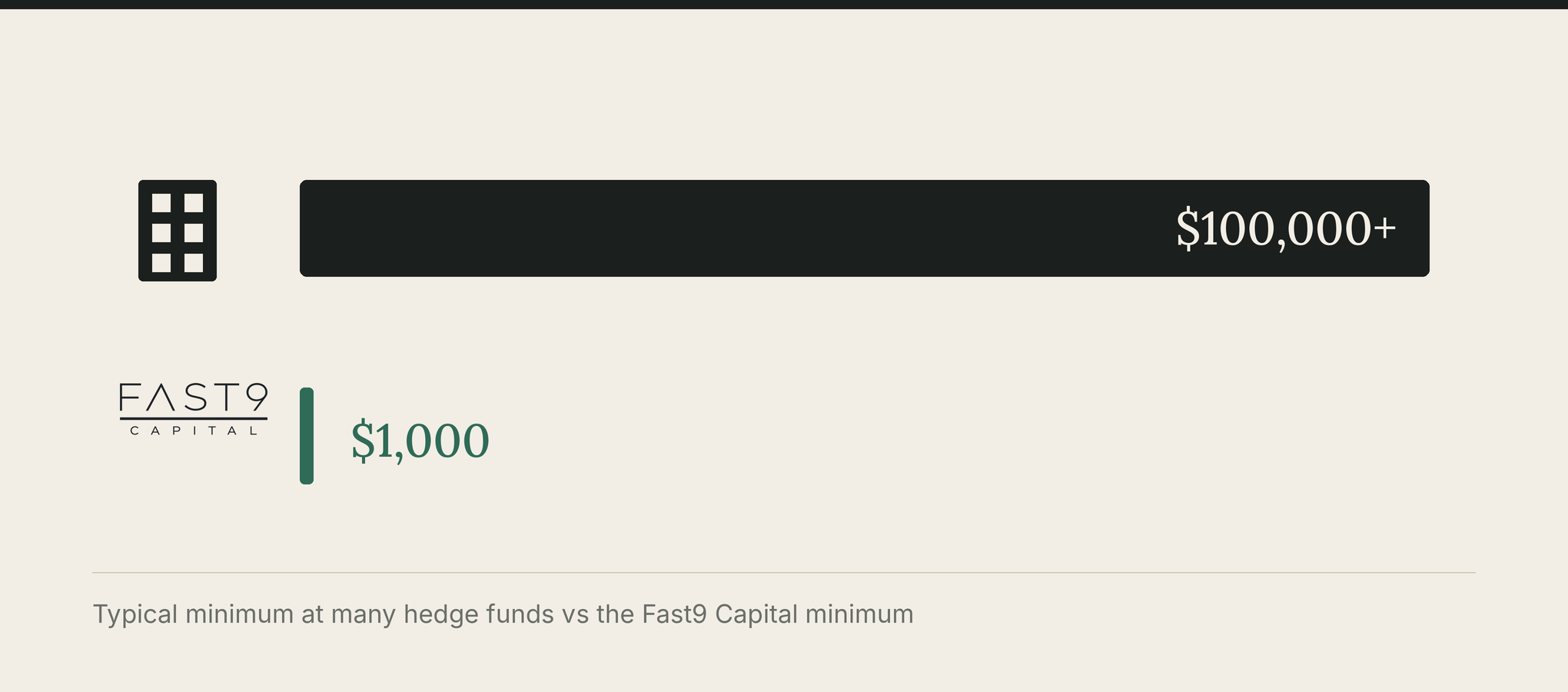
Side by side
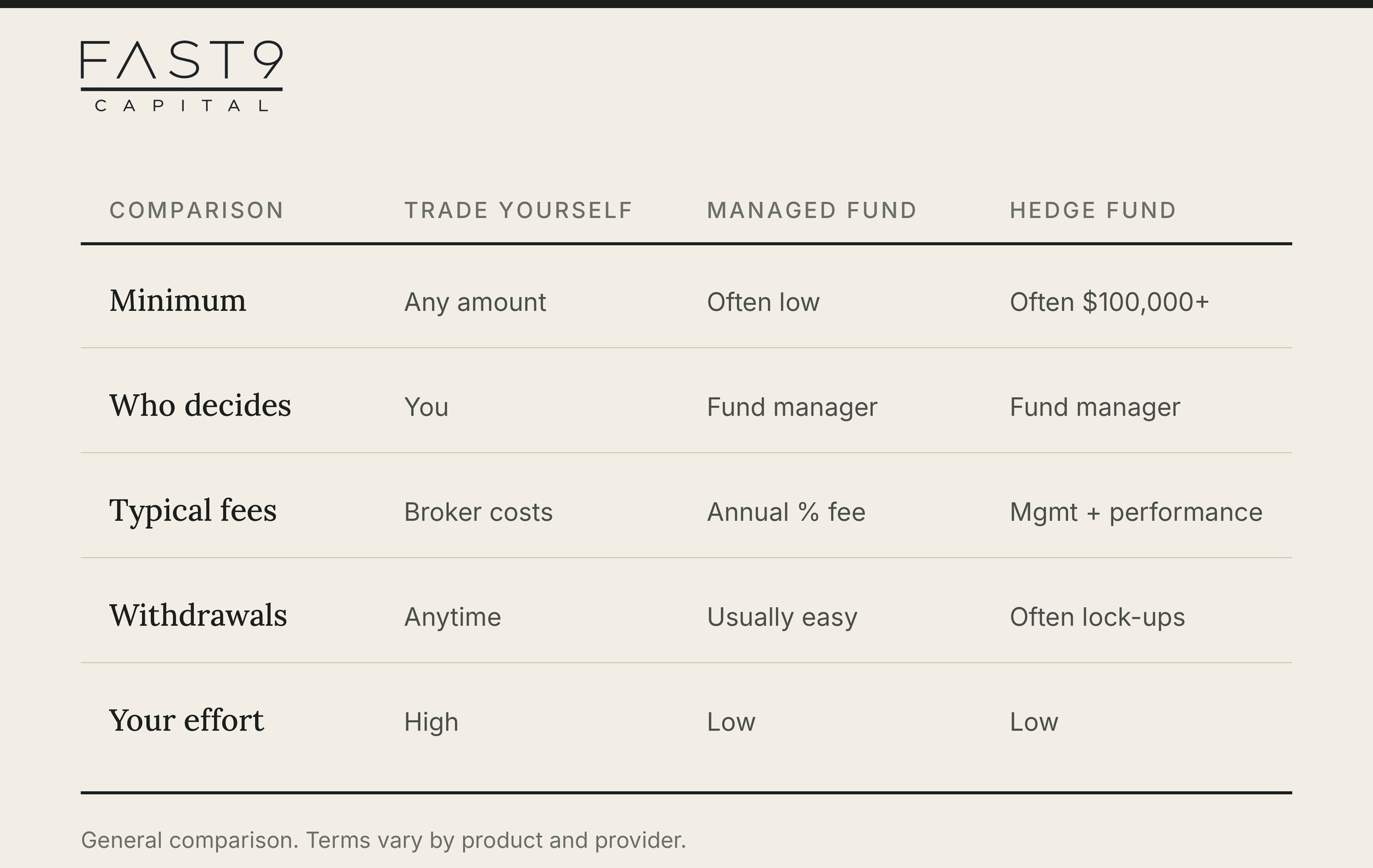
This is a general comparison. Terms vary by product and provider, so always read the fund’s documents.
So which fits a small investor?
- If you want control and have time to learn, trading it yourself can work, but be realistic about the skill and discipline it takes.
- If you want simple, long-term, hands-off investing, a managed fund is the straightforward choice.
- If you want hedged, market-neutral strategies, a traditional hedge fund is usually out of reach for a small investor because of the minimum and lock-up.
This leaves a gap. Many small investors want professional, rules-based strategies that don’t depend on market direction, without a large minimum or years of lock-up.
Questions to ask before you invest
- What is the minimum investment, and what are all the fees?
- Can I withdraw when I need to, and are there penalties?
- How does the strategy behave when markets fall?
- What risk controls are in place, such as limits on losses?
- Is the provider regulated, and where can I verify that?
- Are the returns shown targets, or actual audited results?
Where Fast9 Capital fits
Fast9 Capital is built for the investor who sits between these three options. It offers hedge-fund-style strategies on terms designed for individual investors.
- $1,000 minimum. You don’t need $100,000 to begin.
- No lock-in. Deposit, scale or withdraw whenever you need to.
- No management fee. A 40% performance fee applies only to new net profits above a 5% hurdle, after a high-water mark. Fund costs apply.
- Rules, not opinions. The portfolio uses a 40/40/20 framework: delta-neutral trades, statistical arbitrage and a cash and margin reserve. Every position is sized by rule.
- Controlled downside. The strategy targets a maximum drawdown of under 5%.
- Open worldwide. Investors from many countries can apply.
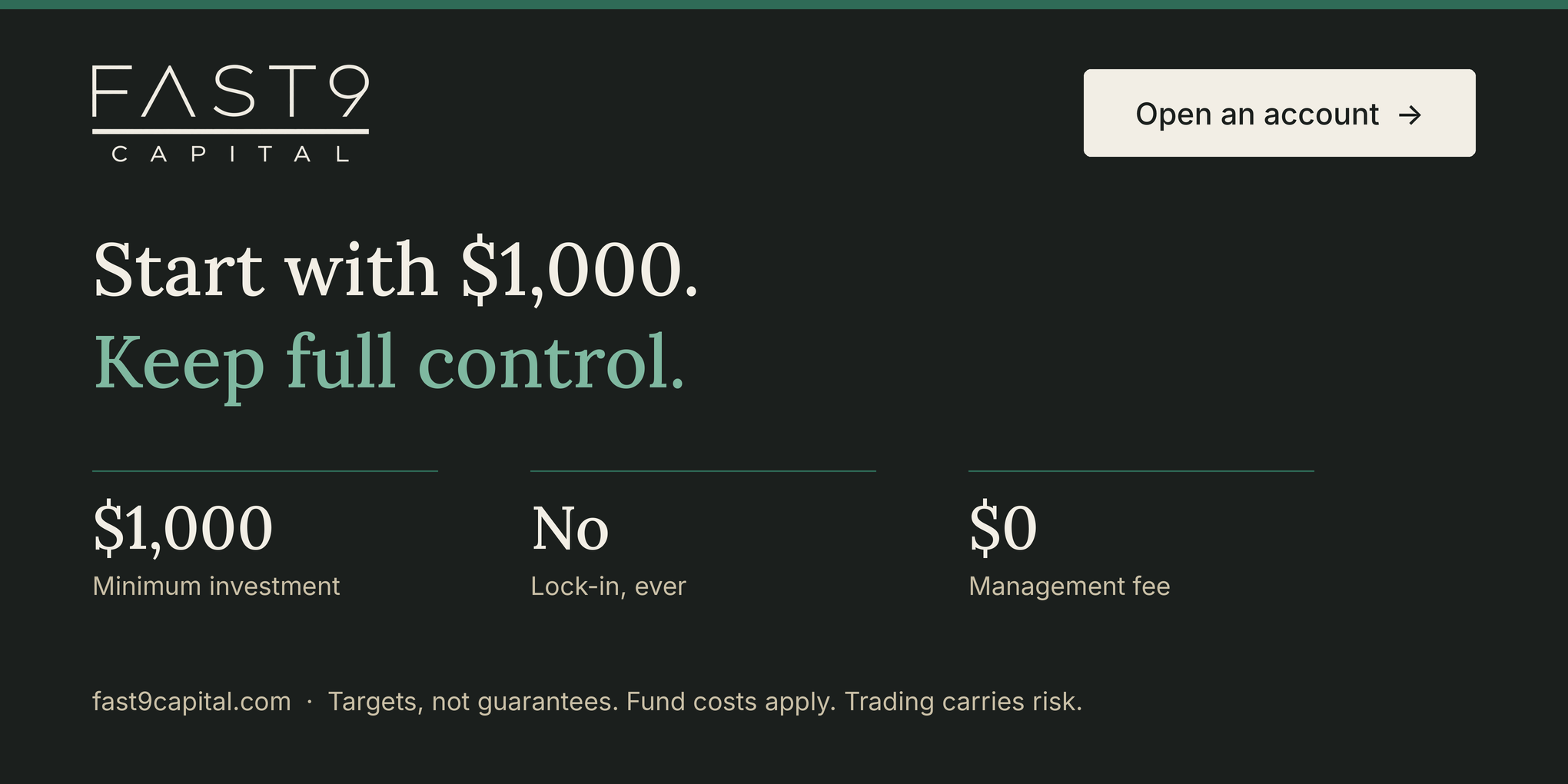
Ready to see if it fits? Open an account → or talk to the team first. The desk replies personally.
Key takeaways
- Trading yourself gives control but demands time, skill and discipline.
- Managed funds are simple and accessible, but fees apply and many follow the market.
- Traditional hedge funds offer advanced strategies but usually need large minimums and long lock-ups.
- Small investors who want hedged, rules-based strategies should compare minimums, fees, withdrawal terms and risk controls.
FAQ
Can a small investor invest in a hedge fund?
Often not directly. Many require $100,000 or more and accredited status. Some newer funds offer lower minimums, so check each provider’s terms.
Is a managed fund safer than trading myself?
It spreads risk and removes emotional decisions, but it can still lose money, especially in falling markets.
What is the difference between a managed fund and a hedge fund?
Managed funds usually follow simple, long-only approaches with low minimums. Hedge funds use advanced tools such as hedging and short positions, and typically have higher minimums and stricter terms.
Are Fast9 Capital’s returns guaranteed?
No. Figures are strategy targets, not guarantees. Trading carries risk, and you can lose money.
Trading carries risk. This article is for education only and is not financial advice. Targets and projections do not guarantee future results. Fee terms are subject to the fund’s offering documents.